
 Linda Cain
Picture this: a sunny day, friends and family gathered for a cookout, and there’s a platter of grilled meats sizzling on the BBQ. What’s missing? Something tangy, crunchy, and utterly delightful to balance those rich flavors.
That’s when achara swoops in to save the day! This traditional Filipino pickled relish pairs beautifully with grilled dishes, fried rice, and even on sandwiches. Trust me, once you have achara by your side, you’ll wonder how you ever lived without it.
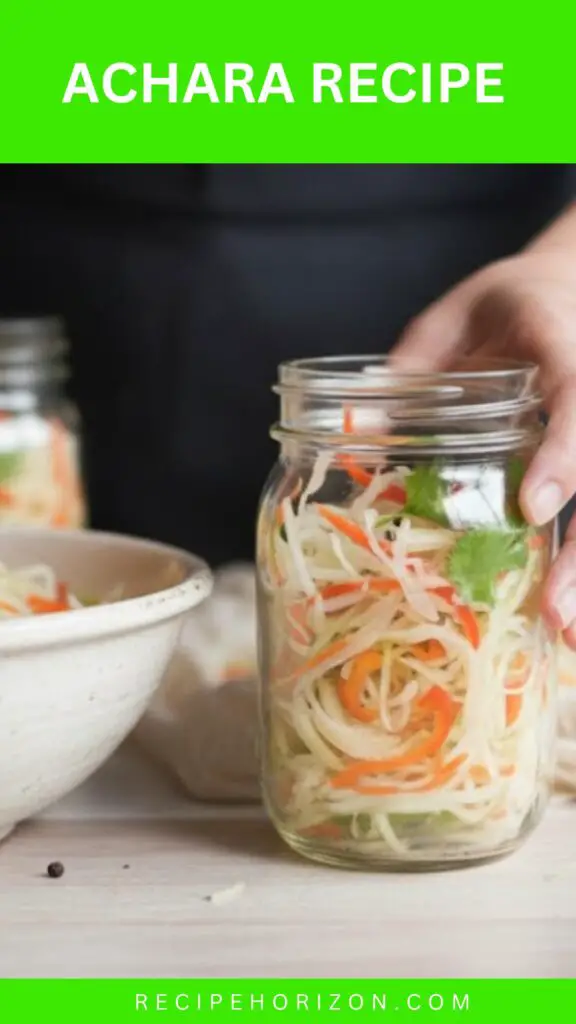
Achara, or pickled green papaya, is a beloved staple in Filipino cuisine. This vibrant side dish is often served alongside meat dishes, where its sweet and tangy flavor cuts through the richness, making each bite a refreshing experience.
Making achara is a fairly straightforward process, and with just a bit of preparation, you can have this delicious pickled treat ready to brighten up your meals.
You Might Like These Recipes!
Bok Choy Salad with Sesame Almond Crunch Recipe
Mrs. Myers Banana Bread Recipe
What is achara recipe?
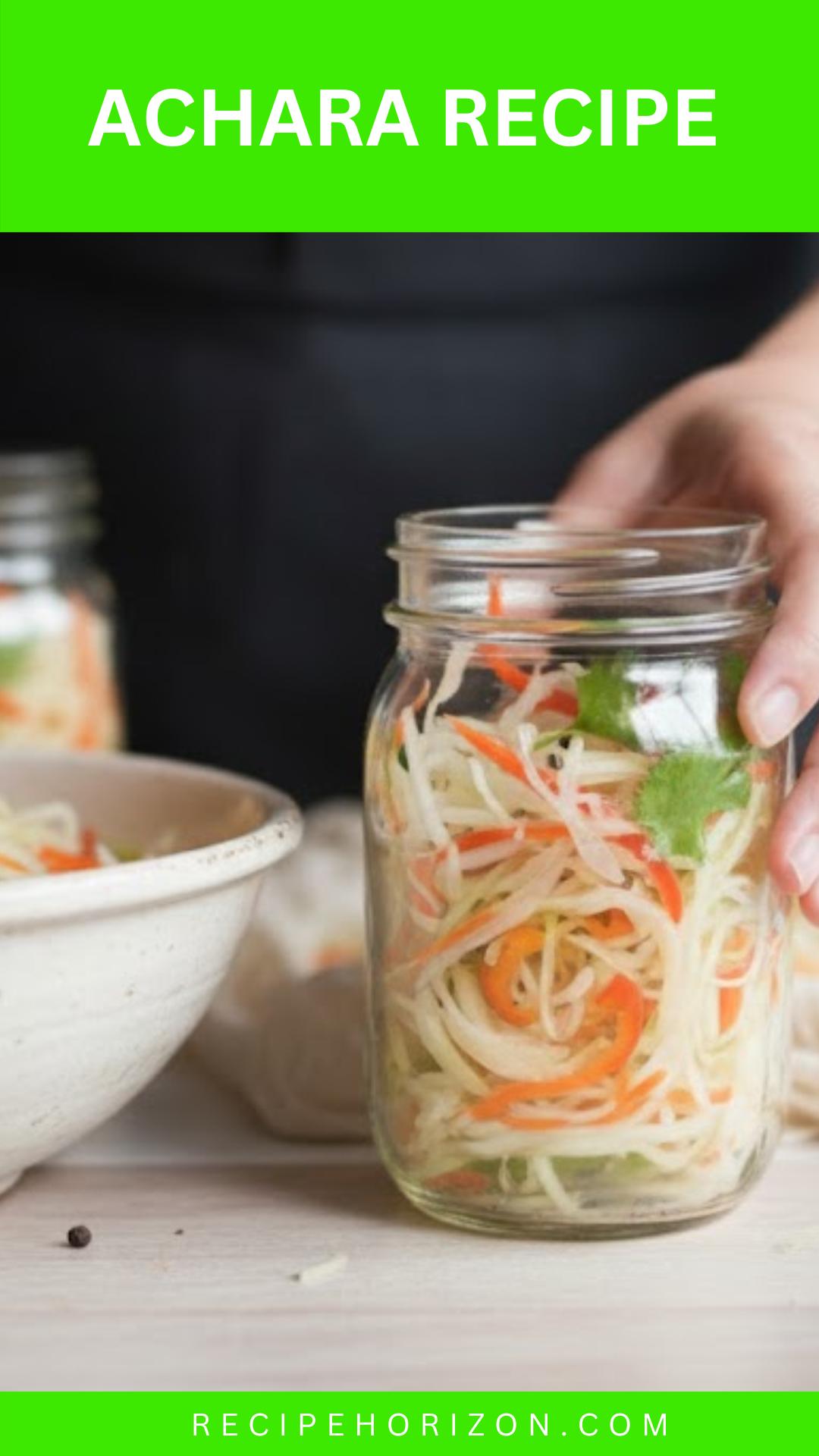
Achara is a Filipino-style pickled vegetable dish primarily made from julienned green papaya, carrots, and a variety of spices. This zesty condiment is brined in vinegar, sugar, and a hint of salt, resulting in a crunchy texture and a flavor that dances between sweet and tangy. It’s an eye-catching dish that not only adds color to your plate but also a burst of flavor that can elevate any meal.
What is the flavor profile of this dish?
The flavor of achara is a delightful contrast of sweetness and acidity, with a mild spiciness from the garlic. The natural crunch of the fresh vegetables adds texture, while the vinegar dressing gives it that signature tang. It’s sweet enough to be a palate pleaser yet sharp enough to cleanse your taste buds. The interplay of these flavors makes achara a versatile companion to a variety of dishes.
Why You’ll Love this dish?
You’re going to love achara for so many reasons! First, it’s a quick fix for anyone looking to elevate their meals without breaking a sweat in the kitchen. Second, it’s incredibly versatile; you can pair it with virtually anything on your plate, from grilled meats to rice bowls. Lastly, it’s a great way to use fresh vegetables and bring a healthy, homemade touch to your table. Plus, the satisfaction of making your own pickles adds a level of pride that store-bought can’t match.
The Ingredients
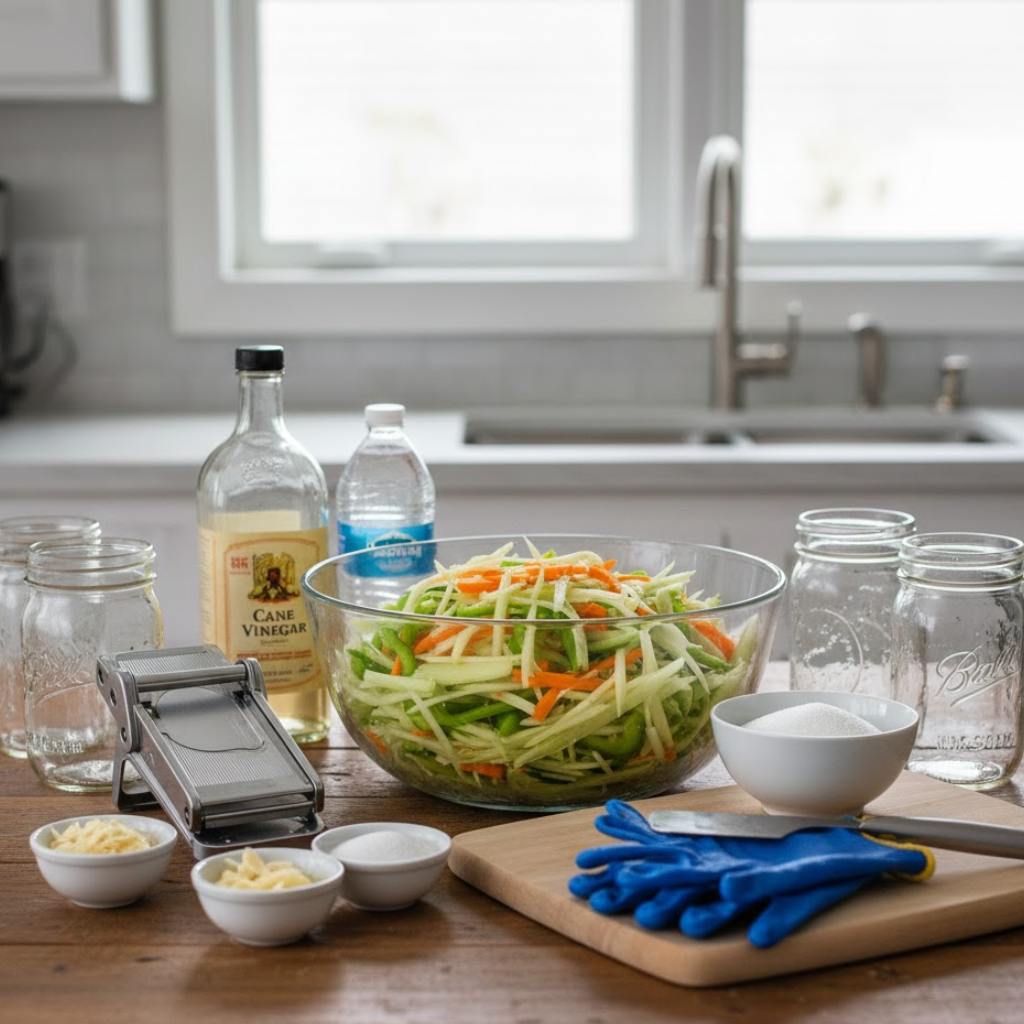
To create your homemade achara, you’ll need the following ingredients, some fresh and crisp additions for more flavor without overpowering the classic taste:
– ½ lb unripe green papaya, julienned
– 2 small carrots, julienned
– ½ green bell pepper, julienned
– 1 small cucumber, julienned (new addition for freshness)
– 1 tbsp salt (for brining)
– Water
– 12 cloves of garlic, thinly sliced
– 4 cups cane vinegar
– 2 cups white granulated sugar
– 2 tsp salt (for the brine)
Equipment Used:
– 12 oz mason jars
– Cut-resistant safety gloves
– Mandolin slicer – Benriner
– Cutting board – Epicurean
– Glass bowl – Anchor Hocking
– Jar spatula – OXO
Ingredients From : hungryhuy.com
How to make achara recipe?
The process of making achara is simpler than you might think. Let’s dive into the step-by-step directions that will guide you through creating this delightful condiment right in your kitchen.
Step 1: Prepare the Vegetables
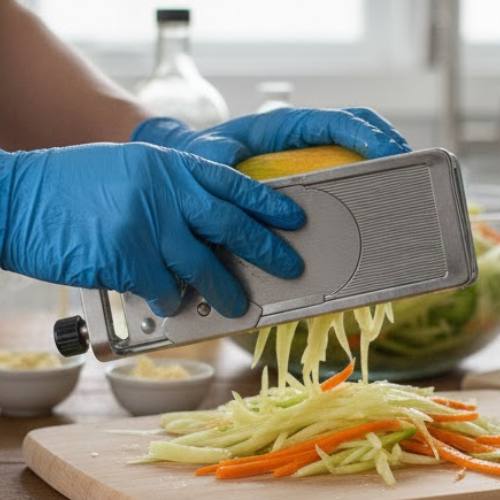
Start by washing the green papaya and carrots thoroughly under running water. For maximum safety, it’s important to use cut-resistant gloves, especially when you slice the vegetables. I love using a mandolin slicer for even, thin pieces. Slice the green papaya and carrots carefully until you have a nice, consistent julienne. For the bell pepper, a simple chef’s knife will do. Aim for thin, uniform slices to ensure they pickle nicely.
Step 2: Brining the Veggies
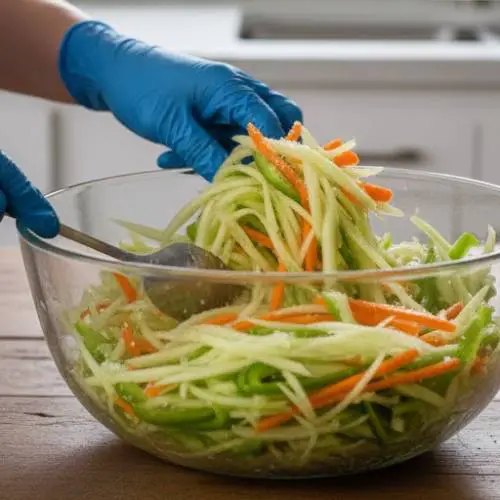
Once your vegetables are sliced, combine the julienned papaya, carrots, and bell pepper in a large mixing bowl. Sprinkle the tablespoon of salt over the vegetables and mix thoroughly, ensuring everything is coated well. Leave the mixture on the counter for about 30 minutes. This time allows the salt to draw out moisture and start the brining process, which is key for that crunched-up texture.
Step 3: Rinse and Drain
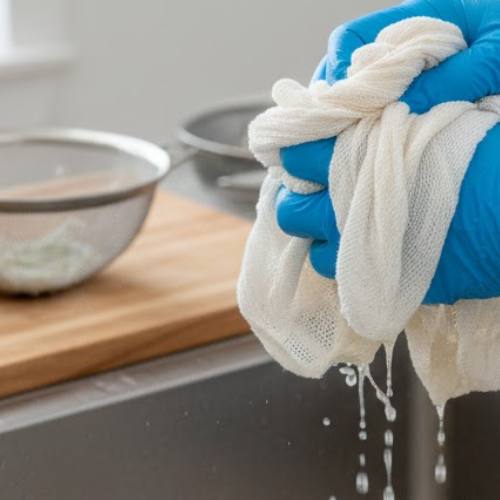
After the brining time, place the vegetable mixture in a strainer and rinse them under cold water. This helps remove excess salt, resulting in a perfectly balanced final product. Now, transfer the rinsed veggies to a cheesecloth or clean kitchen towel and wring it out gently. You want to squeeze out as much water as possible, which concentrates the flavor and improves the crunch.
Step 4: Jar the Vegetables
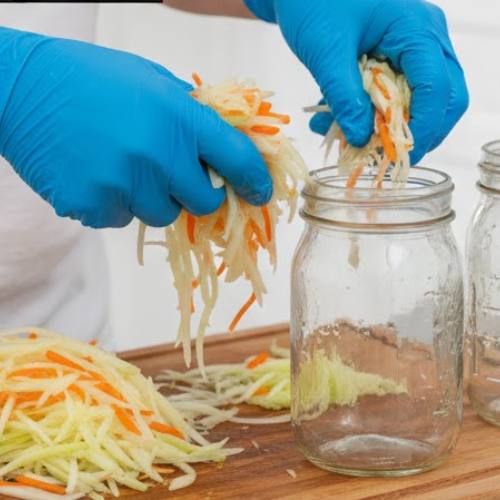
Now comes the fun part! Carefully distribute the drained vegetable mixture evenly into your sanitized mason jars. Make sure not to pack them too tightly; they need a bit of room to breathe.
Step 5: Prepare the Brine
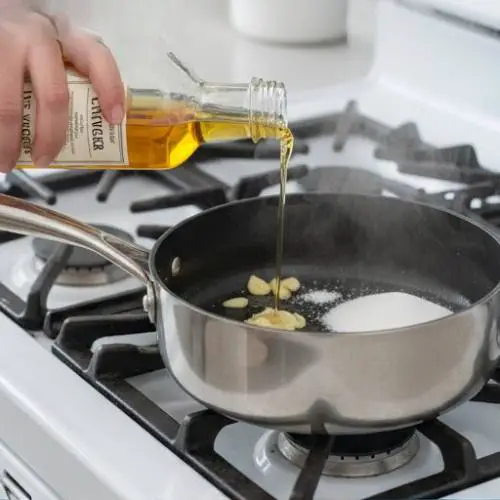
In a small saucepan, combine the cane vinegar, sliced garlic, granulated sugar, and the remaining salt. Heat this mixture over medium heat until it comes to a gentle boil. Keep stirring until the sugar is fully dissolved. Lower the heat and let it simmer for another minute. You want everything well combined but don’t overcook it.
Step 6: Fill the Jars
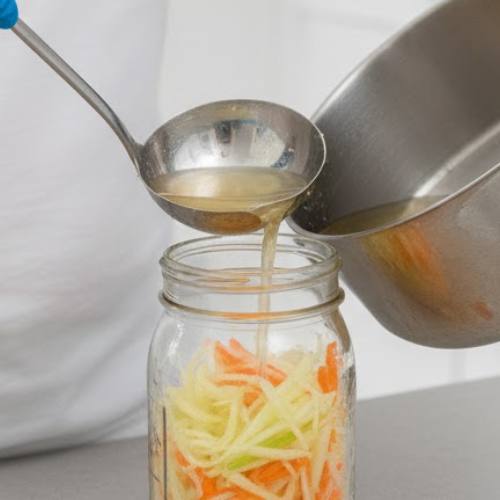
With the brine prepared, carefully pour the hot mixture over the vegetables in each jar. You want to make sure the brine covers all the veggies completely; this ensures even pickling. Use a chopstick to gently push the vegetables down if any are floating above the brine.
Step 7: Cool and Refrigerate
Seal the mason jars tightly with their lids and let them sit at room temperature until they cool. Afterward, transfer them to the fridge. You should ideally let them pickle for at least two days before trying them out to allow all those lovely flavors to meld.
Tips
– Use fresh produce: Ensure all vegetables are fresh and crisp for the best taste.
– Experiment with spices: Consider adding spices like black peppercorns or bay leaves for additional flavor.
– Safety first: Always wear cut-resistant gloves while slicing to prevent any mishaps.
– Don’t skip the brining time: It’s essential for flavor development!
– Make it spicy: For those who enjoy a bit of heat, add a few slices of chili peppers to the mix.
How Can You Store This achara recipe?
Achara can be stored in the refrigerator for up to a month. The pickling process helps preserve it, but remember to always use clean utensils when serving to avoid contamination. Make sure the jars are tightly sealed to keep everything fresh. As the days go by, the flavors will deepen, making it even tastier!
If some of the ingredients are not available in your pantry, what are some alternative choices you can consider?
– For green papaya:*Try using zucchini.* Zucchini has a similar crunch and will absorb the flavors of the brine.
– For cane vinegar:*White vinegar works.* Though it will slightly alter the taste, it will still be delicious.
– If you can’t find unripe carrots:*Regular carrots are fine.* They may be a bit sweeter but will still work nicely.
– For white sugar:*Honey or maple syrup can be used.* Adjust the quantity as needed for sweetness preference.
– For garlic:*Garlic powder can substitute.* Use about half the amount since it is more concentrated.
Serving Suggestions
– As a side:*Serve achara alongside grilled chicken or pork.* It complements the smoky flavors.
– On burgers:*Top your burger with a spoonful of achara for an unexpected twist.
– With rice bowls:*Add it to your rice dishes for a crunchy texture contrast.
– On tacos:*Use it as a topping for fish or veggie tacos to give a refreshing crunch.
– In sandwiches:*Layer it in sandwiches or wraps for a delightful crunch.
What other substitutes can I use in achara recipe?
– For green bell pepper:*Red or yellow bell peppers are great choices.* They’ll provide similar crunchiness and a slightly sweeter flavor.
– Instead of cane vinegar:*Rice vinegar could be used.* It’s milder, resulting in a softer taste.
– For sugar:*Agave nectar works,* but adjust the quantity as it’s sweeter.
– For carrots:*Parsnips can also be julienned.* They offer a unique flavor while maintaining a similar texture.
– Use of daikon radish instead of papaya:*It can add a nice peppery flavor.

Achara Recipe
Ingredients
Equipment
Method
- Start by washing the green papaya and carrots thoroughly under running water. For maximum safety, it’s important to use cut-resistant gloves, especially when you slice the vegetables. I love using a mandolin slicer for even, thin pieces. Slice the green papaya and carrots carefully until you have a nice, consistent julienne. For the bell pepper, a simple chef’s knife will do. Aim for thin, uniform slices to ensure they pickle nicely.
- Once your vegetables are sliced, combine the julienned papaya, carrots, and bell pepper in a large mixing bowl. Sprinkle the tablespoon of salt over the vegetables and mix thoroughly, ensuring everything is coated well. Leave the mixture on the counter for about 30 minutes. This time allows the salt to draw out moisture and start the brining process, which is key for that crunched-up texture.
- After the brining time, place the vegetable mixture in a strainer and rinse them under cold water. This helps remove excess salt, resulting in a perfectly balanced final product. Now, transfer the rinsed veggies to a cheesecloth or clean kitchen towel and wring it out gently. You want to squeeze out as much water as possible, which concentrates the flavor and improves the crunch.
- Now comes the fun part! Carefully distribute the drained vegetable mixture evenly into your sanitized mason jars. Make sure not to pack them too tightly; they need a bit of room to breathe.
- In a small saucepan, combine the cane vinegar, sliced garlic, granulated sugar, and the remaining salt. Heat this mixture over medium heat until it comes to a gentle boil. Keep stirring until the sugar is fully dissolved. Lower the heat and let it simmer for another minute. You want everything well combined but don’t overcook it.
- With the brine prepared, carefully pour the hot mixture over the vegetables in each jar. You want to make sure the brine covers all the veggies completely; this ensures even pickling. Use a chopstick to gently push the vegetables down if any are floating above the brine.
- Seal the mason jars tightly with their lids and let them sit at room temperature until they cool. Afterward, transfer them to the fridge. You should ideally let them pickle for at least two days before trying them out to allow all those lovely flavors to meld.
Nutrition
Notes
Tried this recipe?
Let us know how it was!FAQs
1. How long should I let achara sit before serving?
While you can technically eat it right after making it, letting it sit in the fridge for two days allows the flavors to meld beautifully, providing a more robust taste.
2. Can I can achara for longer storage?
You can preserve achara by canning it, but this requires knowledge of safe canning practices. If done correctly, it can last several months. Just be sure to pasteurize first and use proper canning jars.
3. What other vegetables can I use to make achara?
Aside from papaya and carrots, you can also include cucumbers, radishes, jicama, or even green beans! Just ensure they are fresh and crunchy.
4. Is achara gluten-free?
Yes! Achara is gluten-free as it primarily uses fresh vegetables, vinegar, and sugar.
5. Can I make achara spicy?
Absolutely! Feel free to add sliced chili peppers or a dash of chili flakes to the brine for a spicy kick.
Conclusion
Achara is more than just a side dish; it’s a burst of flavor that enhances your meals in ways you might not have imagined. With just a little effort, you can create this zesty pickled delicacy that delights the senses and complements a variety of dishes. Go ahead, whip up this achara recipe and enjoy the crispy, refreshing crunch that will have everyone at your table asking for seconds!