
Ingredients
Method
Step 1: Char Your Aromatics for Maximum Depth
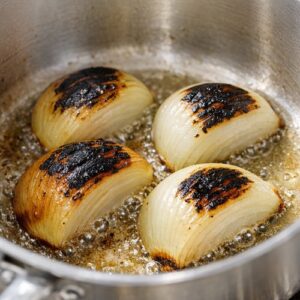
- Heat your tablespoon of oil in a large, heavy-bottomed pot over medium-high heat. Once it shimmers (about 1 minute), add your halved onions, cut-side down, and your ginger slices. Let them sit undisturbed for 3 to 4 minutes until they develop a dark, caramelized char. You'll smell the sweet, slightly bitter aroma—that's exactly what you want. Flip them and char the other side for another 2 to 3 minutes. This step transforms raw onion and ginger into something far more complex and round.
Step 2: Toast Your Whole Spices
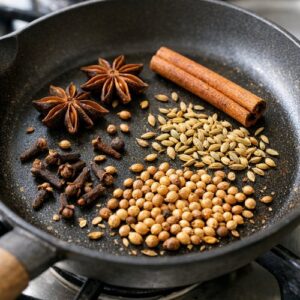
- While your aromatics are charring, place your star anise, cinnamon stick, cloves, fennel seeds, and coriander seeds in a dry skillet over medium heat. Toast them for 1 to 2 minutes, shaking the pan occasionally, until the kitchen smells like an Asian spice market—warm, nutty, and aromatic. Don't let them burn; you're looking for fragrance, not color. Transfer them to a small bowl and set aside.
Step 3: Build Your Broth Foundation
- Pour your 2 liters of water into the pot with your charred onions and ginger. Increase the heat to high and bring the water to a rolling boil. Once it's boiling, add your chicken thighs. Return to a boil and then immediately reduce heat to low. Skim any foam or impurities that rise to the surface for the first 2 to 3 minutes—this step keeps your broth clear and clean-tasting.
Step 4: Simmer with Spices and Aromatics
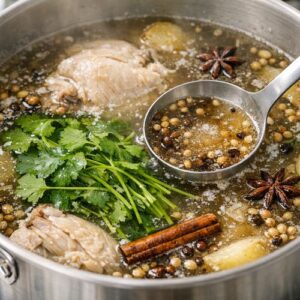
- Add your toasted spices, your small bunch of cilantro (stems and all; you'll remove it later), the fish sauce, sugar, and salt. Stir gently to combine. Reduce heat to the lowest setting and simmer, partially covered, for 45 to 60 minutes. The broth should barely bubble—just a gentle, occasional plop at the surface. This slow, low approach extracts maximum collagen and gelatin from the bones and skin, creating that signature silky mouthfeel.
Step 5: Strain and Refine Your Broth
- After simmering, carefully remove the chicken thighs with a slotted spoon and set them on a cutting board. Strain your broth through a fine-mesh sieve into a clean pot, discarding the solids (onions, ginger, spices, cilantro stems). The broth should be clear and amber-colored. Taste it now. Does it need more salt? More fish sauce for umami? This is your moment to adjust. Shred or chop your chicken thighs into bite-sized pieces, discarding the skin and bones.
Step 6: Cook Your Noodles Separately
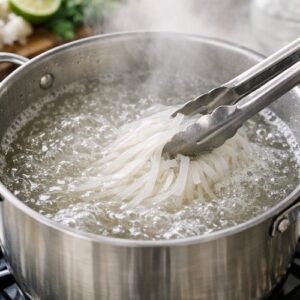
- Bring a large pot of water to a boil. Add your dried rice noodles and cook according to package directions, usually 6 to 8 minutes for dried noodles, until they're tender but not mushy. If you're using fresh rice noodles, simply separate them gently and place them in a bowl, then pour hot broth over them to warm through. Drain the cooked noodles in a colander and divide them among your serving bowls.
Step 7: Assemble Your Bowls
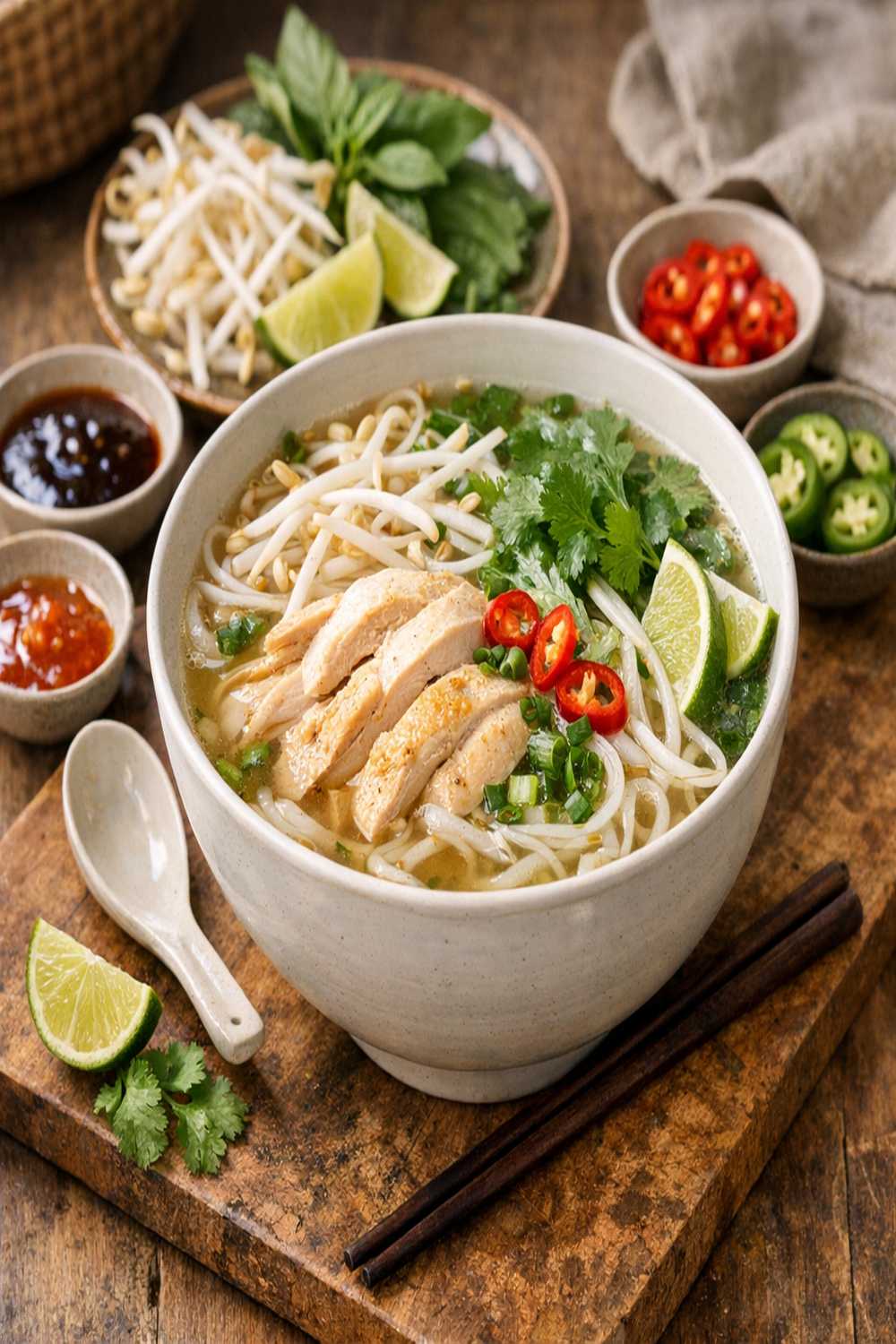
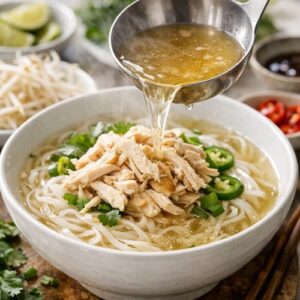
- This is the beautiful, interactive part. Ladle your hot broth into each bowl of noodles. Top each bowl with a generous portion of shredded chicken. Arrange your fresh herbs (Thai basil and cilantro), bean sprouts, sliced green onions, and red chillies on a separate platter or in individual bowls, letting each person customize their own soup. Serve with lime wedges, hoisin sauce, and sriracha on the side.
Nutrition
Notes
- Make your broth a day ahead - Prepare steps 1-5 the night before. Refrigerate the broth separately from the chicken. The next day, skim any solidified fat from the top (though I often leave it for added richness), reheat gently, and proceed with cooking noodles and assembling. This also gives flavors time to meld.
- Use a thermometer for perfect chicken - If you want to ensure your chicken is cooked through without overcooking, remove thighs when they reach an internal temperature of 165°F (74°C).
- Don't skip the char step - That dark, caramelized onion and ginger are non-negotiable. Charring develops deep, almost nutty flavors that boiling alone cannot achieve.
- Toast your spices fresh every time - Pre-toasted or pre-ground spices lose potency. Taking two minutes to toast whole spices transforms your broth from good to restaurant-quality.
- Keep your herb platter abundant - The contrast between hot broth and cool, fresh herbs is part of pho's magic. Don't be stingy with basil and cilantro.
- Taste and adjust at the end - Broths vary based on water type and ingredient variability. Always taste before serving and adjust salt, fish sauce, or sugar to your preference.