
 Linda Cain
When I first learned to make authentic chicken pho, I discovered that this aromatic Vietnamese soup is far more than a meal—it’s a meditation in a bowl. The layered spices, tender chicken, and fresh herbs create a harmony that reminds me why I became a dietitian: food nourishes not just our bodies, but our souls. If you’re looking to expand your Asian cuisine repertoire, I’d also recommend trying Banh Mi Recipe with Pork Belly, which shares similar Vietnamese flavor principles and pairs beautifully as a lunch option alongside your pho.
A Kitchen Memory That Changed Everything
I’ll never forget the first time my grandmother taught me to make pho. It was early morning in her kitchen, and the sun hadn’t yet broken through the window. She was already there, patient and methodical, charring onions and ginger over an open flame. “Linda,” she said, her voice steady, “good broth takes time because good things never rush.”
I was twelve, more interested in the cartoons playing in the next room. But something about watching her hands move with such intention pulled me in. We spent the next four hours together, and by the time that first spoonful touched my lips, I understood: this wasn’t just about flavor. This was about presence, care, and the belief that nourishing people matters.
That memory shaped my entire career as a registered dietitian. Now, I’m thrilled to share this authentic recipe with you—one I’ve tested and refined countless times in my Kansas kitchen.
What is Authentic Chicken Pho?
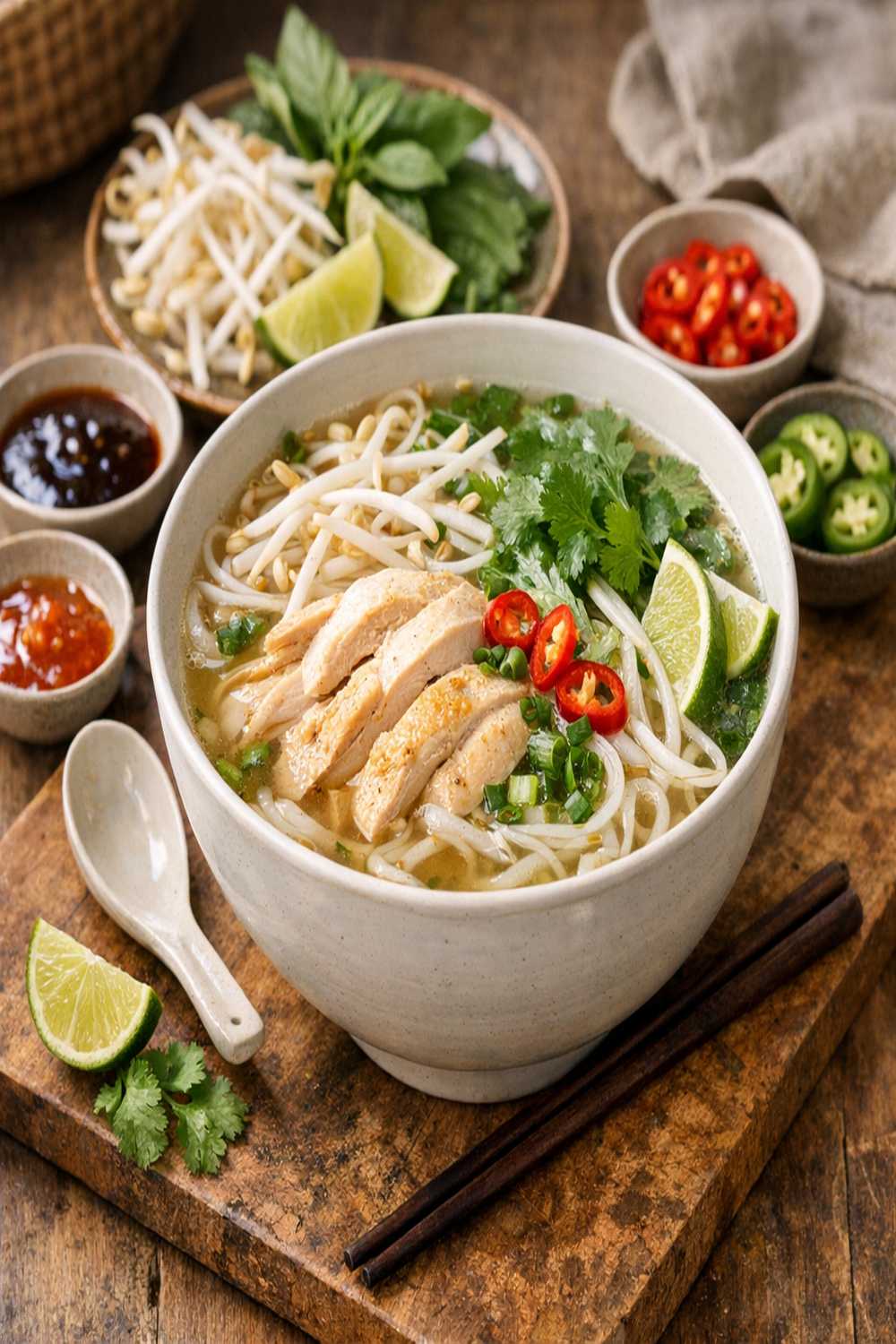
Chicken pho is a traditional Vietnamese soup that represents centuries of culinary wisdom. Unlike its beef counterpart (pho bo), this version features bone-in, skin-on chicken thighs that create a rich, deeply flavored broth through gentle simmering. The magic lies in the aromatic base of charred onions, ginger, and whole spices—star anise, cinnamon, coriander seeds, fennel, and cloves—each contributing distinct notes that build complexity without overwhelming.
What makes this recipe authentically Vietnamese is the balance between the savory, umami-rich broth and the bright, fresh herbs and condiments served alongside. You’re not eating pho; you’re assembling it, personalizing each spoonful with lime juice, fresh basil, cilantro, bean sprouts, and heat from chili or sriracha. It’s interactive, inclusive, and deeply respectful of individual preference—a philosophy I absolutely embrace in nutrition.
Why You’ll Love This Authentic Chicken Pho Recipe
- Deeply nourishing and naturally balanced – The bone-in chicken thighs provide collagen and gelatin, which support joint and gut health. The broth is rich in minerals, and the fresh herbs add vitamins and antioxidants without calorie overload.
- Surprisingly simple to execute – Once your spices are toasted and your broth is simmering, the hard work is done. This recipe teaches patience rather than complexity.
- Infinitely customizable – Every person at your table can build their perfect bowl, making it ideal for families with different preferences.
- Budget-friendly with premium results – Chicken thighs are economical, yet they deliver more flavor than breast meat. You’re creating restaurant-quality soup at home for a fraction of the cost.
- Completely satisfying as a complete meal – The noodles, protein, vegetables, and broth create a balanced plate that keeps you satisfied for hours.
The Ingredients
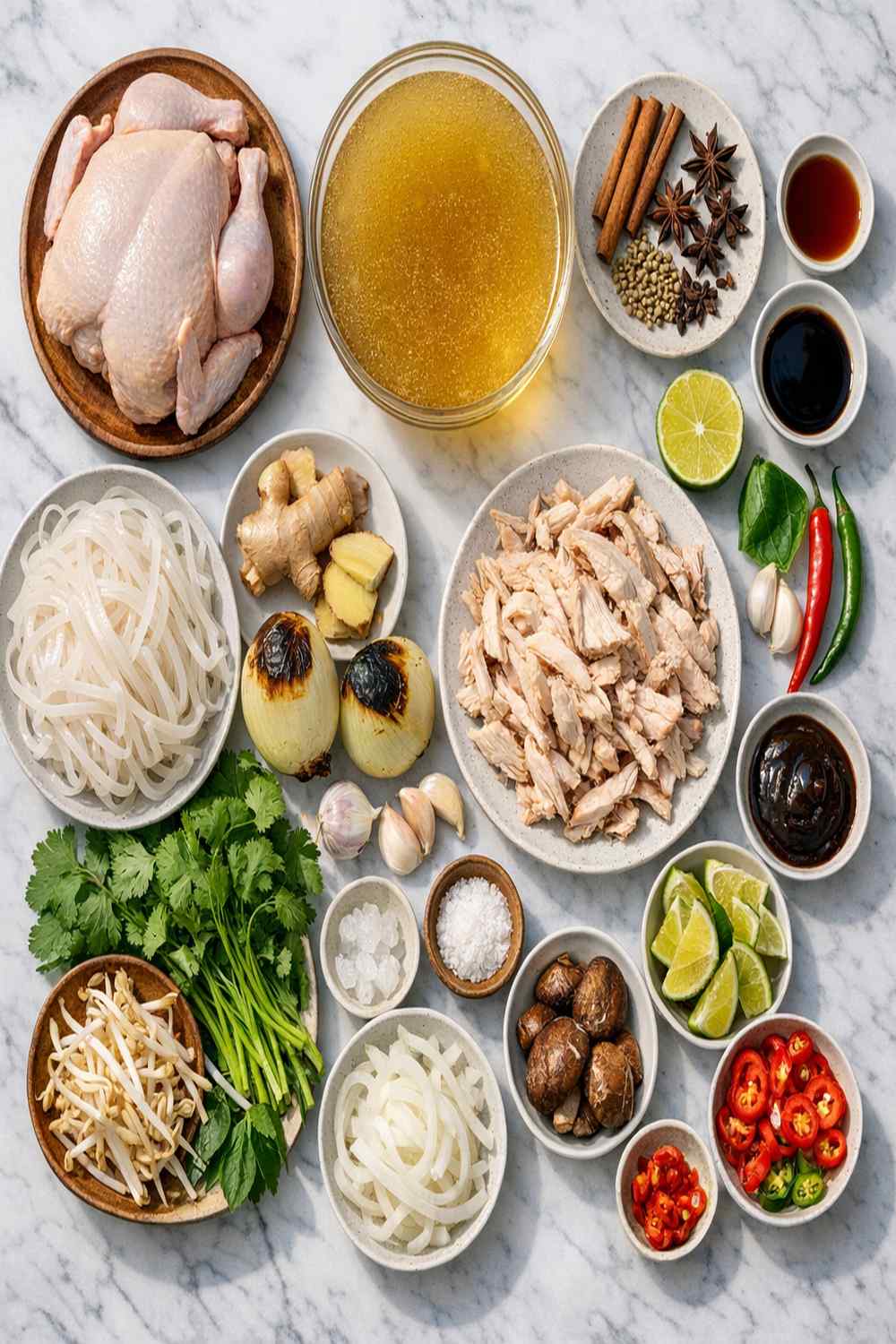
I’ve tested this recipe with various ingredient ratios and preparations. What follows are the quantities and notes I’ve found create the most authentic, flavorful result. This recipe yields 4 generous servings.
- 4 whole cloves (use sparingly; they’re potent)
- 6 teaspoons white sugar (or 2 tablespoons, balances the salt and spice)
- 1 small bunch fresh Thai basil (or regular basil in a pinch)
- 2 medium yellow onions (halved, skin left on for deeper color and earthiness)
- 2 teaspoons coriander seeds (toasted before use)
- 1 cinnamon stick (about 7-8 centimeters long, adds warmth)
- 2 teaspoons fennel seeds (not ground; whole seeds provide better texture release)
- 5 centimeter piece fresh ginger root (sliced 0.75 centimeter thick, unpeeled)
- 2 liters water (filtered water produces the clearest broth)
- 2 green onion stems (white and light green parts, finely sliced)
- 3 cups fresh bean sprouts (mung bean sprouts are traditional)
- 1.5 kilograms bone-in, skin-on chicken thighs (about 8-10 thighs, this cut creates superior flavor)
- 8 teaspoons fish sauce (or 2.5 tablespoons, the umami foundation)
- Sriracha sauce (for those who enjoy heat)
- Hoisin sauce (for serving)
- ¾ teaspoon cooking salt or kosher salt (or ½ teaspoon table salt if that’s what you have)
- 1 tablespoon neutral oil (vegetable or canola)
- 2 limes (cut into 4 wedges each)
- 1 small bunch fresh cilantro (coriander; this is non-negotiable)
- 5 whole star anise pods (the signature spice of pho)
- 360 grams dried thin flat rice noodles (or 600 grams fresh rice noodles)
- Red chillies, finely sliced (optional, for garnish)
How to Make Authentic Chicken Pho?
This recipe unfolds in stages: preparing your aromatics, building your broth, cooking your noodles, and finally, assembling. Don’t skip steps or rush the simmering time. The broth is where all the flavor lives, and you want every minute of that gentle heat working for you.
Step 1: Char Your Aromatics for Maximum Depth
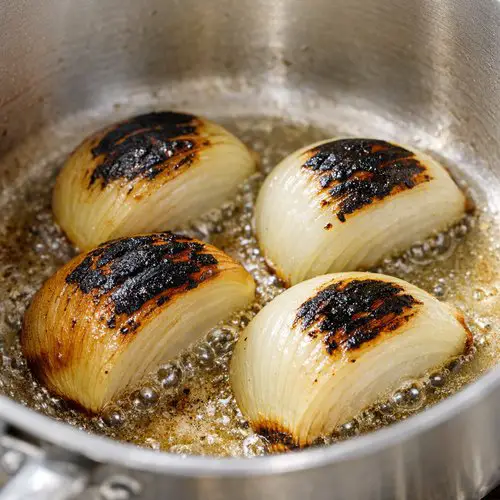
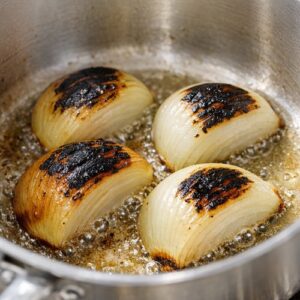
Heat your tablespoon of oil in a large, heavy-bottomed pot over medium-high heat. Once it shimmers (about 1 minute), add your halved onions, cut-side down, and your ginger slices. Let them sit undisturbed for 3 to 4 minutes until they develop a dark, caramelized char. You’ll smell the sweet, slightly bitter aroma—that’s exactly what you want. Flip them and char the other side for another 2 to 3 minutes. This step transforms raw onion and ginger into something far more complex and round.
Step 2: Toast Your Whole Spices
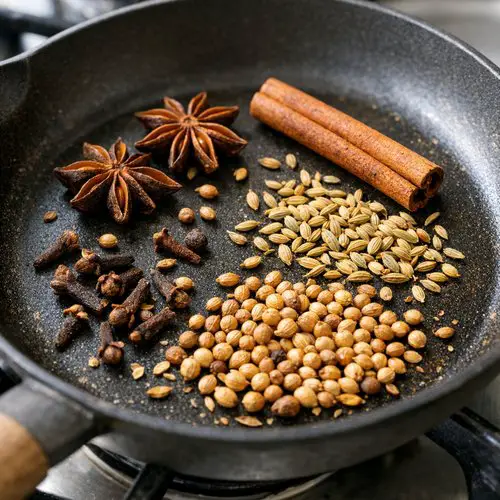
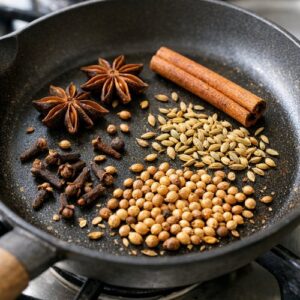
While your aromatics are charring, place your star anise, cinnamon stick, cloves, fennel seeds, and coriander seeds in a dry skillet over medium heat. Toast them for 1 to 2 minutes, shaking the pan occasionally, until the kitchen smells like an Asian spice market—warm, nutty, and aromatic. Don’t let them burn; you’re looking for fragrance, not color. Transfer them to a small bowl and set aside.
Step 3: Build Your Broth Foundation
Pour your 2 liters of water into the pot with your charred onions and ginger. Increase the heat to high and bring the water to a rolling boil. Once it’s boiling, add your chicken thighs. Return to a boil and then immediately reduce heat to low. Skim any foam or impurities that rise to the surface for the first 2 to 3 minutes—this step keeps your broth clear and clean-tasting.
Step 4: Simmer with Spices and Aromatics
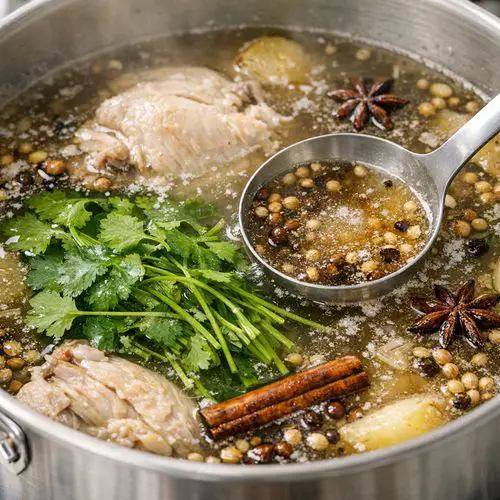
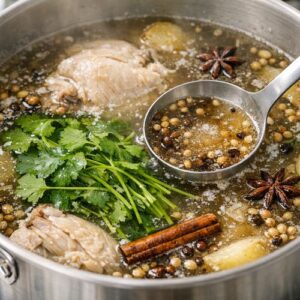
Add your toasted spices, your small bunch of cilantro (stems and all; you’ll remove it later), the fish sauce, sugar, and salt. Stir gently to combine. Reduce heat to the lowest setting and simmer, partially covered, for 45 to 60 minutes. The broth should barely bubble—just a gentle, occasional plop at the surface. This slow, low approach extracts maximum collagen and gelatin from the bones and skin, creating that signature silky mouthfeel.
Step 5: Strain and Refine Your Broth
After simmering, carefully remove the chicken thighs with a slotted spoon and set them on a cutting board. Strain your broth through a fine-mesh sieve into a clean pot, discarding the solids (onions, ginger, spices, cilantro stems). The broth should be clear and amber-colored. Taste it now. Does it need more salt? More fish sauce for umami? This is your moment to adjust. Shred or chop your chicken thighs into bite-sized pieces, discarding the skin and bones.
Step 6: Cook Your Noodles Separately
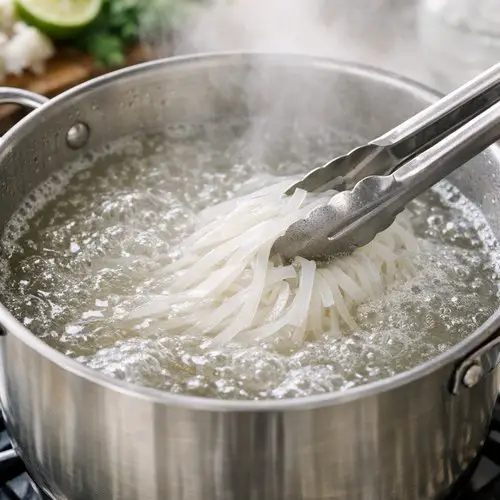
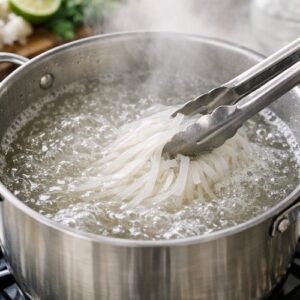
Bring a large pot of water to a boil. Add your dried rice noodles and cook according to package directions, usually 6 to 8 minutes for dried noodles, until they’re tender but not mushy. If you’re using fresh rice noodles, simply separate them gently and place them in a bowl, then pour hot broth over them to warm through. Drain the cooked noodles in a colander and divide them among your serving bowls.
Step 7: Assemble Your Bowls
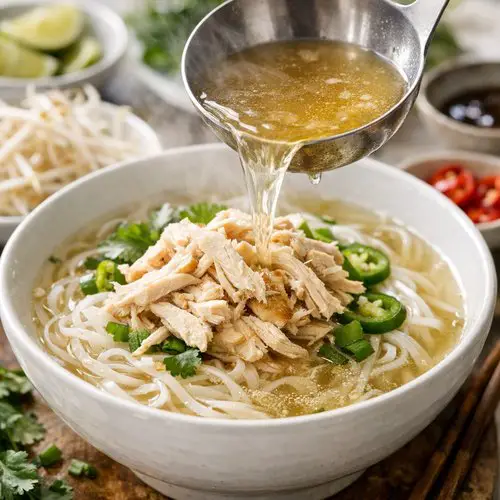
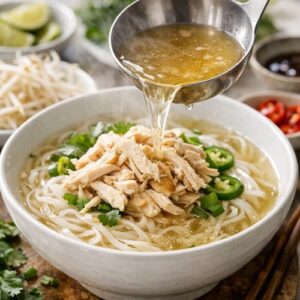
This is the beautiful, interactive part. Ladle your hot broth into each bowl of noodles. Top each bowl with a generous portion of shredded chicken. Arrange your fresh herbs (Thai basil and cilantro), bean sprouts, sliced green onions, and red chillies on a separate platter or in individual bowls, letting each person customize their own soup. Serve with lime wedges, hoisin sauce, and sriracha on the side.
Expert’s Nutritional Tip
As a registered dietitian, I’m particularly enthusiastic about the collagen and gelatin content in bone-in, skin-on chicken thighs and their slow-simmered broth. Unlike quick chicken breast recipes, this preparation creates a naturally gelatin-rich liquid that supports joint flexibility, skin elasticity, and gut lining integrity. The fish sauce adds iodine and selenium, minerals many people don’t consume enough of, while the fresh herbs provide vitamin K for bone health and antioxidants for cellular protection. This isn’t a “diet” soup; it’s a genuinely therapeutic meal.
Tips and Tricks
- Make your broth a day ahead – Prepare steps 1-5 the night before. Refrigerate the broth separately from the chicken. The next day, skim any solidified fat from the top (though I often leave it for added richness), reheat gently, and proceed with cooking noodles and assembling. This also gives flavors time to meld.
- Use a thermometer for perfect chicken – If you want to ensure your chicken is cooked through without overcooking, remove thighs when they reach an internal temperature of 165°F (74°C).
- Don’t skip the char step – That dark, caramelized onion and ginger are non-negotiable. Charring develops deep, almost nutty flavors that boiling alone cannot achieve.
- Toast your spices fresh every time – Pre-toasted or pre-ground spices lose potency. Taking two minutes to toast whole spices transforms your broth from good to restaurant-quality.
- Keep your herb platter abundant – The contrast between hot broth and cool, fresh herbs is part of pho’s magic. Don’t be stingy with basil and cilantro.
- Taste and adjust at the end – Broths vary based on water type and ingredient variability. Always taste before serving and adjust salt, fish sauce, or sugar to your preference.
Make-Ahead Guide
Complete Broth (up to 4 days ahead) – Prepare the broth through step 5 and refrigerate in an airtight container. The flavors actually deepen as it sits. Reheat gently before serving, and skim any solidified fat if desired.
Shredded Chicken (up to 3 days ahead) – Cook and shred your chicken thighs separately, storing in an airtight container. Reheat gently in the warm broth just before serving to prevent drying.
Fresh Herb and Vegetable Prep (up to 8 hours ahead) – Slice green onions, chop cilantro and basil, and slice chillies. Store in separate containers with paper towels to absorb excess moisture. Bean sprouts are best used the day of, as they wilt quickly.
Rice Noodles (day-of, but prep-able) – Cook your noodles up to 2 hours ahead. Toss lightly with a tiny bit of oil to prevent sticking, and store in a covered container at room temperature. Divide into bowls and reheat by pouring hot broth over them.
Common Mistakes to Avoid
- Rushing the broth simmer – A 20-minute simmer won’t extract the gelatin and deep flavors you’re after. Stick to 45-60 minutes on low heat. Patience is the secret ingredient.
- Skipping the charring step – Boiling onions and ginger directly creates a one-dimensional broth. The char adds caramel, umami, and depth that’s irreplaceable.
- Using ground spices instead of whole – Ground spices are convenient but lose potency quickly. Whole spices, toasted fresh, deliver exponentially more flavor. It’s a 2-minute investment that changes everything.
- Overcooking the noodles – Mushy noodles will disintegrate in hot broth. Cook them until just tender, and you’ll have noodles that hold their texture for an entire bowl.
Seasonal Variations
Spring – Add fresh spring peas and tender young shoots of basil. Increase fresh herbs on your platter for brightness.
Summer – Incorporate fresh corn kernels, sliced zucchini, or fresh dill alongside the traditional herbs. Serve with extra lime for a lighter feel.
Fall – Add roasted mushrooms or a touch of ginger-infused broth for deeper warmth. Consider garnishing with crispy fried shallots for textural contrast.
Winter – Simmer your broth longer (up to 90 minutes) for extra richness. Consider adding a dried shiitake or two for umami depth, and serve with warming spices more prominently.
Can I Store Authentic Chicken Pho?
I always encourage storing the components separately rather than as a complete bowl, as this maintains texture and prevents noodles from absorbing too much broth.
Broth – Refrigerate in an airtight container for up to 4 days, or freeze for up to 3 months. Reheat gently over medium-low heat.
Shredded Chicken – Store separately in an airtight container for up to 3 days in the refrigerator. Reheat in warm broth just before serving.
Cooked Noodles – Store for up to 2 days, tossed lightly with a bit of oil. Reheat by pouring hot broth directly over them.
Fresh Herbs and Vegetables – Keep in separate containers for up to 1 day. Bean sprouts are best used the same day for maximum crispness.
Important – Don’t store a complete bowl of pho. Noodles will become mushy, and herbs will wilt. Always assemble fresh when serving.
Nutrition Information
Per serving (includes broth, noodles, and chicken; calculated based on USDA FoodData Central), this authentic chicken pho contains approximately 380 calories, 28 grams of protein, 32 grams of carbohydrates, and 12 grams of fat. The protein comes primarily from bone-in chicken thighs, which are also rich in selenium, phosphorus, and B vitamins. The carbohydrates are from rice noodles and naturally occurring sugars in the broth. Fish sauce contributes iodine, and fresh herbs add negligible calories but significant micronutrients and phytonutrients.
The beauty of pho is that it’s naturally balanced—protein, carbohydrate, fat, and vegetables in one bowl. The broth is naturally low in sodium compared to many restaurant versions, though this recipe does include fish sauce, so I recommend tasting before adding additional salt at the table. If you’re watching sodium intake, taste and adjust the fish sauce downward.
What Can I Serve With Authentic Chicken Pho?
Pho is typically served as a complete meal, but I love pairing it with complementary Vietnamese dishes that share similar flavor profiles. For a rounded meal, consider serving alongside Best Nuoc Cham Recipe, which is a traditional Vietnamese dipping sauce that adds brightness and heat to any pho experience.
You might also explore Best Filipino Lumpia Shanghai Recipe as a crispy starter—the contrast between the fried exterior and hot, aromatic soup is delightful.
- Vietnamese spring rolls – Fresh, cool, herbaceous rolls provide textural contrast and are light enough to eat before or alongside pho without overwhelming the palate.
- Crispy fried shallots – A traditional garnish that adds savory crunch. Sprinkle them on top of your assembled bowl for textural interest.
- Jasmine rice on the side – Some people enjoy a small portion of fragrant jasmine rice alongside their pho, using it to soak up the last of the broth.
- Pickled vegetables – Quick-pickled carrots, daikon, or cucumbers add palate-cleansing acidity and crunch.
- Sesame or chili oil – Drizzle for those seeking extra heat or nutty richness.
Substitutes
- Chicken breast instead of thighs – You can use bone-in chicken breast, though it will yield a lighter, less rich broth. The result will be more delicate but less deeply flavored. I personally recommend sticking with thighs for authenticity and nutrition.
- Star anise substitution – If you cannot find star anise, use an additional cinnamon stick and an extra clove. The flavor won’t be identical, but it will be pleasant.
- Fish sauce alternatives – Some people use soy sauce (though the flavor is different) or tamari for a gluten-free option. You’ll lose the umami depth of fish sauce, so consider adding a splash of miso paste to compensate.
- Fresh rice noodles vs. dried – Both are valid; dried noodles require cooking, while fresh noodles simply need hot broth poured over them. Fresh noodles offer better texture but have a shorter shelf life.
- Thai basil alternatives – Regular basil, mint, or even a combination of both can substitute for Thai basil. The flavor will be slightly different but still delicious.

Authentic Chicken Pho Recipe
Ingredients
Method
- Heat your tablespoon of oil in a large, heavy-bottomed pot over medium-high heat. Once it shimmers (about 1 minute), add your halved onions, cut-side down, and your ginger slices. Let them sit undisturbed for 3 to 4 minutes until they develop a dark, caramelized char. You'll smell the sweet, slightly bitter aroma—that's exactly what you want. Flip them and char the other side for another 2 to 3 minutes. This step transforms raw onion and ginger into something far more complex and round.
- While your aromatics are charring, place your star anise, cinnamon stick, cloves, fennel seeds, and coriander seeds in a dry skillet over medium heat. Toast them for 1 to 2 minutes, shaking the pan occasionally, until the kitchen smells like an Asian spice market—warm, nutty, and aromatic. Don't let them burn; you're looking for fragrance, not color. Transfer them to a small bowl and set aside.
- Pour your 2 liters of water into the pot with your charred onions and ginger. Increase the heat to high and bring the water to a rolling boil. Once it's boiling, add your chicken thighs. Return to a boil and then immediately reduce heat to low. Skim any foam or impurities that rise to the surface for the first 2 to 3 minutes—this step keeps your broth clear and clean-tasting.
- Add your toasted spices, your small bunch of cilantro (stems and all; you'll remove it later), the fish sauce, sugar, and salt. Stir gently to combine. Reduce heat to the lowest setting and simmer, partially covered, for 45 to 60 minutes. The broth should barely bubble—just a gentle, occasional plop at the surface. This slow, low approach extracts maximum collagen and gelatin from the bones and skin, creating that signature silky mouthfeel.
- After simmering, carefully remove the chicken thighs with a slotted spoon and set them on a cutting board. Strain your broth through a fine-mesh sieve into a clean pot, discarding the solids (onions, ginger, spices, cilantro stems). The broth should be clear and amber-colored. Taste it now. Does it need more salt? More fish sauce for umami? This is your moment to adjust. Shred or chop your chicken thighs into bite-sized pieces, discarding the skin and bones.
- Bring a large pot of water to a boil. Add your dried rice noodles and cook according to package directions, usually 6 to 8 minutes for dried noodles, until they're tender but not mushy. If you're using fresh rice noodles, simply separate them gently and place them in a bowl, then pour hot broth over them to warm through. Drain the cooked noodles in a colander and divide them among your serving bowls.
- This is the beautiful, interactive part. Ladle your hot broth into each bowl of noodles. Top each bowl with a generous portion of shredded chicken. Arrange your fresh herbs (Thai basil and cilantro), bean sprouts, sliced green onions, and red chillies on a separate platter or in individual bowls, letting each person customize their own soup. Serve with lime wedges, hoisin sauce, and sriracha on the side.
Nutrition
Notes
Tried this recipe?
Let us know how it was!FAQs
Can I use chicken breast instead of thighs?
Technically, yes, but I don’t recommend it for authentic pho. Chicken thighs have higher fat content and gelatin from the bones and skin, which create that signature silky, deeply flavored broth that defines great pho. Chicken breast is leaner and will produce a thinner, less satisfying broth. If you must use breast, look for bone-in varieties and extend your simmering time to 90 minutes. I’d genuinely suggest investing in thighs; they’re usually more affordable and yield superior results.
Why is my broth cloudy instead of clear and amber?
Cloudiness usually results from not skimming impurities during the first few minutes of simmering or from boiling the broth too vigorously instead of simmering gently. The gentle heat is crucial—you want barely a bubble, not a rolling boil. If your broth is already cloudy, you can strain it through cheesecloth, though going forward, remember to skim and simmer low.
Can I make this ahead for meal prep?
Absolutely! This is one of the best recipes for meal prep. Prepare the broth up to 4 days ahead and refrigerate separately from the chicken. Cook noodles and prep herbs up to 8 hours ahead. Store components separately, and assemble fresh when you’re ready to eat. This prevents noodle mushiness and keeps herbs fresh and vibrant. See the Make-Ahead Guide section for detailed timing.
What if I don’t have fish sauce?
Fish sauce is the backbone of pho’s umami depth, and I really encourage you to find some—it’s worth a trip to an Asian market or an online order. That said, if you truly cannot access it, combine 1 tablespoon of soy sauce with 1 tablespoon of miso paste (dissolved in a bit of warm broth first) as a substitute. The flavor won’t be identical, but it will create umami depth. You’ll lose some of the authentic Vietnamese character, though.
How much fish sauce should I actually use? It smells strong!
Fish sauce absolutely smells pungent in the bottle—funky, briny, almost unpleasant on its own. But once it’s added to warm broth, it transforms, adding savory depth without a fishy taste. The recipe calls for 8 teaspoons (2.5 tablespoons) for 2 liters of broth. Taste your broth before serving and adjust—you can always add more, but you can’t remove it. I recommend starting with 7 teaspoons if you’re nervous, then tasting and adjusting. Most people find that their palate adjusts after trying authentic pho; fish sauce is genuinely essential.
More Recipes You’ll Love
- Bao Recipe – Fluffy, pillowy steamed buns that pair beautifully as a side with pho, offering textural contrast and a vehicle for extra broth-soaking.
- Banh Mi Recipe with Pork Belly – Another Vietnamese classic featuring similar spice profiles and fresh herb components; perfect for lunch when you want something handheld.
- Best Tempura Batter Recipe – For a crispy contrast to serve alongside pho, or as a separate meal using similar Asian flavor principles.
Making authentic chicken pho has become one of my most grounding kitchen practices. There’s something deeply meditative about charring those onions, toasting the spices, and patiently waiting for the broth to develop its golden color and complex flavor. Every time I make it, I think of my grandmother and that early morning in her kitchen, and I’m reminded that the most nourishing meals are those made with intention.
This recipe is adaptable, forgiving, and endlessly rewarding. Whether you’re making it for yourself on a quiet weeknight or for a gathering of loved ones, you’re honoring a tradition that spans centuries and cultures. The beauty of pho is that it brings people together—everyone building their own perfect bowl, each one unique, each one valid.
I’d love to hear how your pho turns out. Did you find a favorite spice ratio? Did someone at your table discover a new herb love? Food is at its best when it’s shared and celebrated, so don’t hesitate to make adjustments that feel right for your palate and your family. Here’s to many delicious meals and happy cooking!